Harumi vs Nextmv: Two Paths to Decision Optimization — And Why Accessibility Matters


In recent years, optimization has moved from niche operations-research teams into the everyday workflow of companies across logistics, retail, manufacturing, energy, and finance. As this shift accelerates, businesses are looking for platforms that not only deliver high-quality optimization results but also make the process usable, collaborative, and scalable.
Two modern platforms have emerged to address this need: Nextmv and Harumi. While both empower teams to model and solve complex decision problems, they do so with different philosophies — one oriented toward technical control, the other toward accessibility and guided intelligence.
1. The Rising Importance of Accessible Optimization
Optimization has traditionally required deep technical expertise in operations research, mathematical modeling, and algorithmic tuning. But today, companies want optimization to behave more like a product than a project: intuitive, collaborative, fast to deploy, and adaptable.
That shift is exactly where the distinction between Harumi and Nextmv becomes most visible. Both platforms are powerful — but the user experience and accessibility they offer differ fundamentally.
2. What Sets Each Platform Apart
Nextmv: A Developer-Centric DecisionOps Platform
Nextmv is built for teams with strong technical backgrounds — developers, data scientists, and OR engineers. It provides extensive flexibility, a code-first workflow, and the ability to design highly customized decision services deployed to Nextmv’s own cloud infrastructure.
Harumi: An AI Optimization Platform for Everyone
Harumi supports technical experts as well, but goes a step further by also empowering business users and operations teams. Through a conversational AI layer, prebuilt templates, and a simplified deployment model, Harumi enables organizations to adopt optimization without needing in-house OR specialists.
3. Key Differences — And What They Mean for Real Teams
Below is a high-level comparison, translated into insights rather than just specifications:
Target Users
Nextmv: Ideal for developers and data scientists who prefer code, custom scripts, and full model control.
Harumi: Designed for both technical and non-technical users. Non-technical users include business managers, finance managers, even sales managers. Non-technical users can collaborate by adding extra context of business rules directly on the platform, enriching the context of the process being optimized without the need of extra meetings.
Customization
Both platforms offer very high customization capabilities.
Nextmv: Users can build their own models or start from predefined templates.
Harumi: also has templates for models in production planning, transport optimization, crew scheduling, cutting stock, and price optimization, which can all be customized for your own needs. Extra points for customization taking place on the platform with AI support and not locally on your computer.
AI Features
Both platforms have a mix of OR models and machine learning, however Harumi shows it also on the user interface.
Nextmv: No built-in chatbot; relies on traditional modeling workflows.
Harumi: Includes a chatbot / conversational AI that helps users define variables, constraints, goals, and even interpret outputs. Harumi's AI accuracy is higher than ChatGPT's most recent model. It went through an extensive fine tuning with real-world operations research problems found in research papers and other sources.
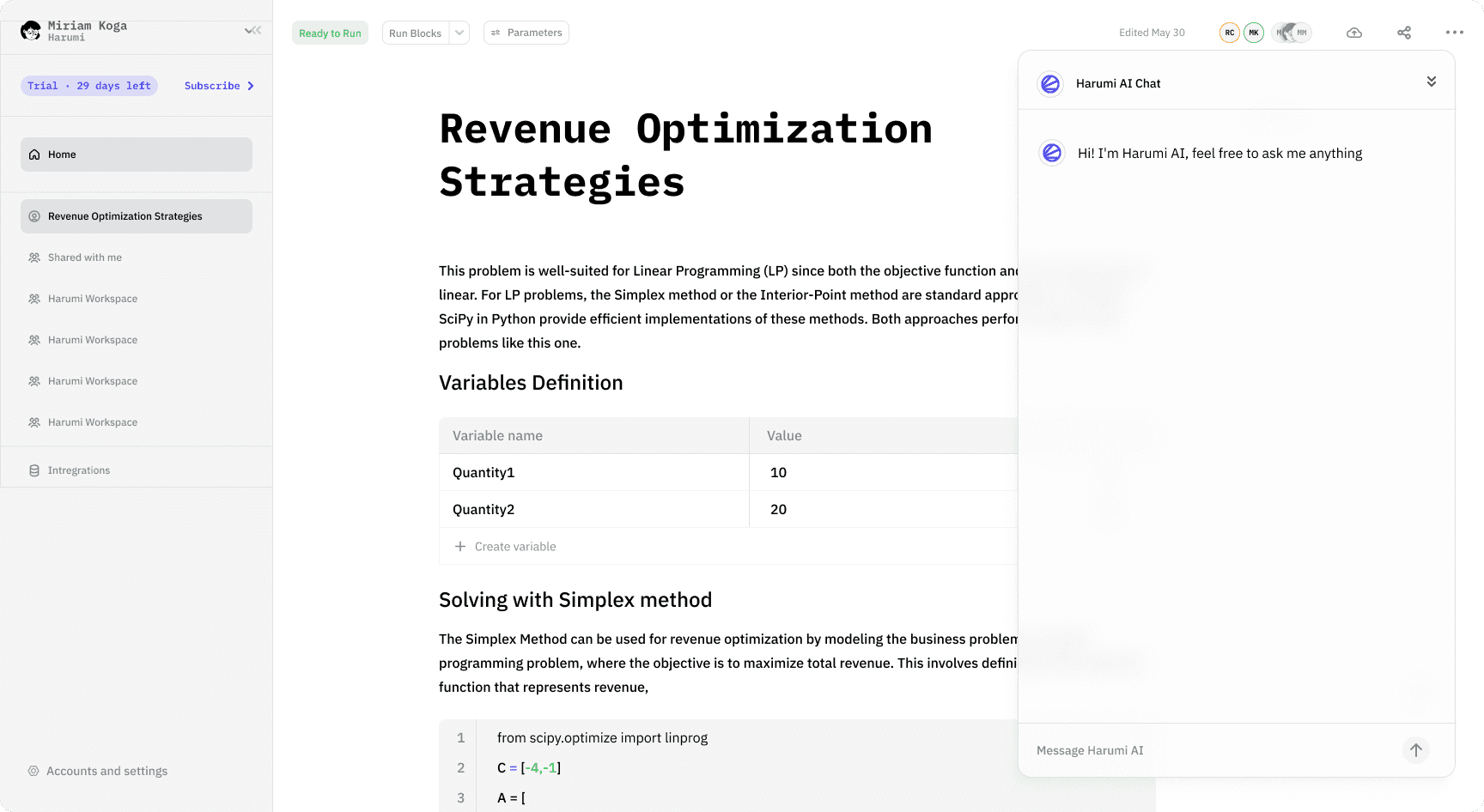
Why it matters:
This dramatically reduces onboarding time and enables users who are not OR experts to participate in the modeling process.
Knowledge Required
Nextmv: Requires significant modeling and optimization expertise.
Harumi: Requires far less — thanks to low-code tools and AI guidance.
Harumi democratizes optimization, turning what used to be specialist knowledge into a guided workflow accessible to many roles.
Typical Use
Nextmv: Best for complex, bespoke systems requiring fine-grained control.
Harumi: Excels in fast deployment of common optimization problems across logistics, workforce, pricing, and planning.
Integrations & Engineering Workflows
Both platforms support engineering workflows such as CI/CD and versioning. However, Harumi’s experience is more guided and user-friendly, making integration tasks easier for mixed teams (technical + business).
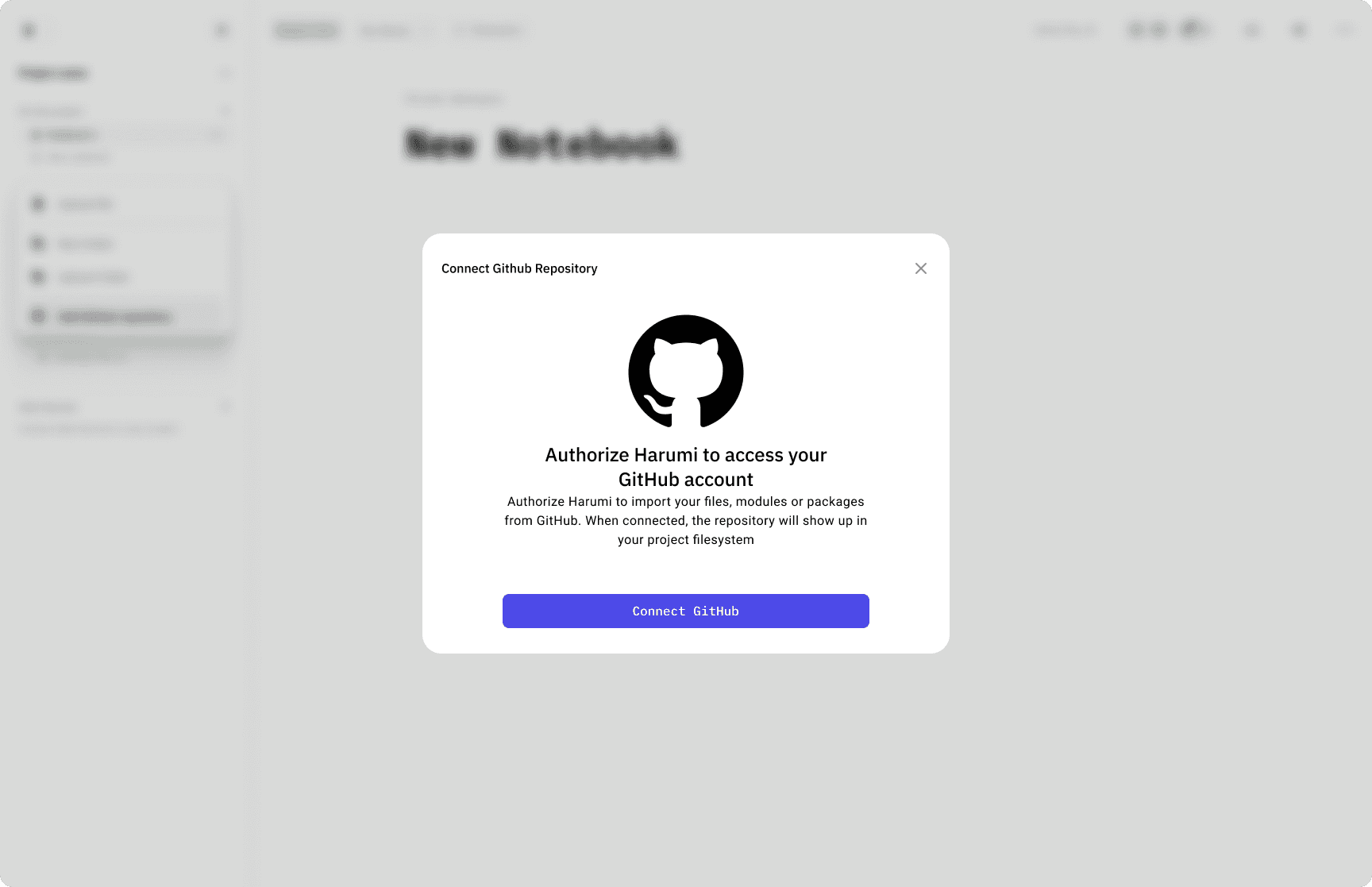
Frontend / Interface for Optimization Applications
Nextmv: Interfaces tend to require personalization and development effort.
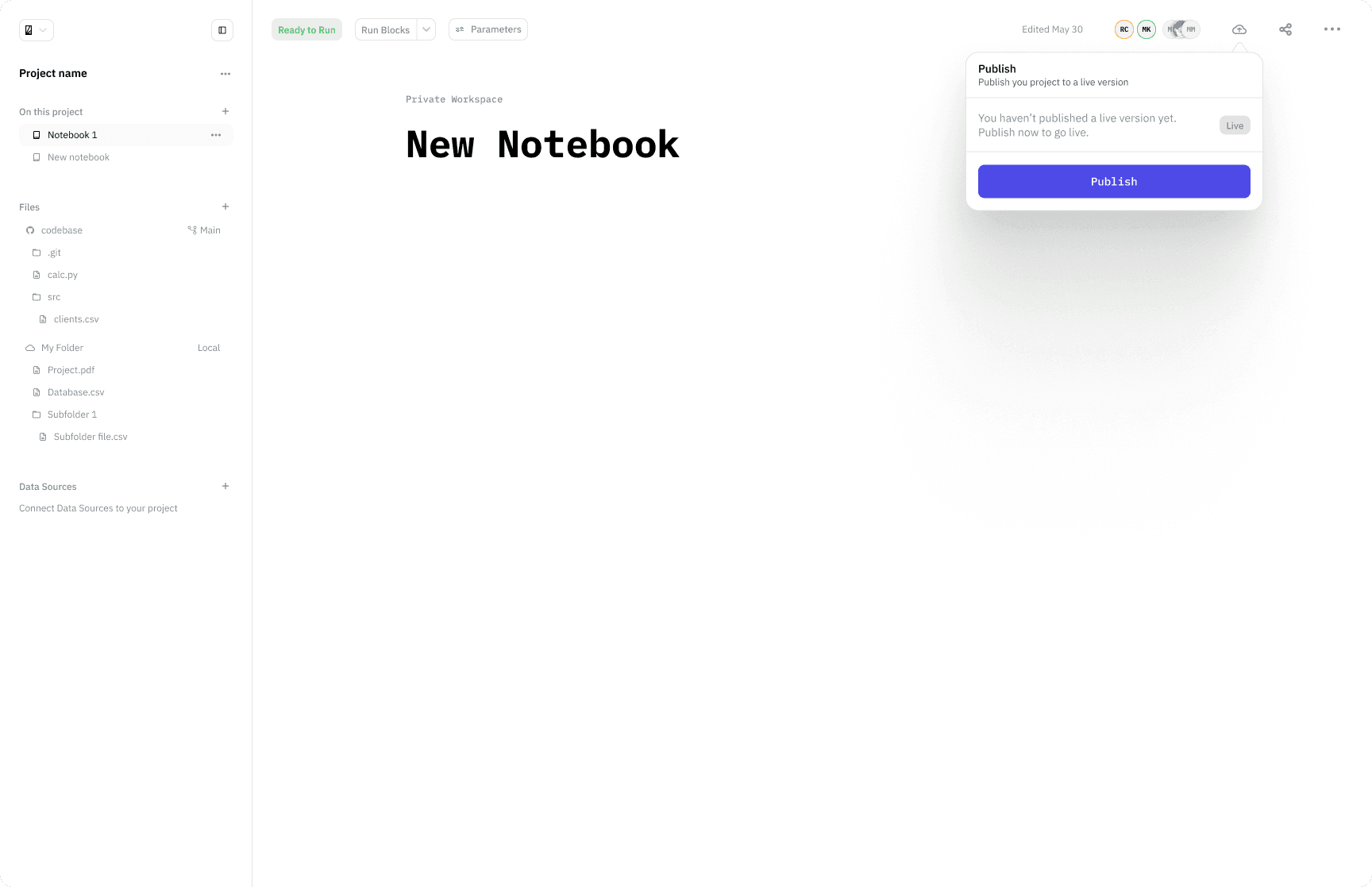
Harumi: Offers a simple, intuitive, ready-to-use interface. Users can easily publish an optimization application with low-code steps.
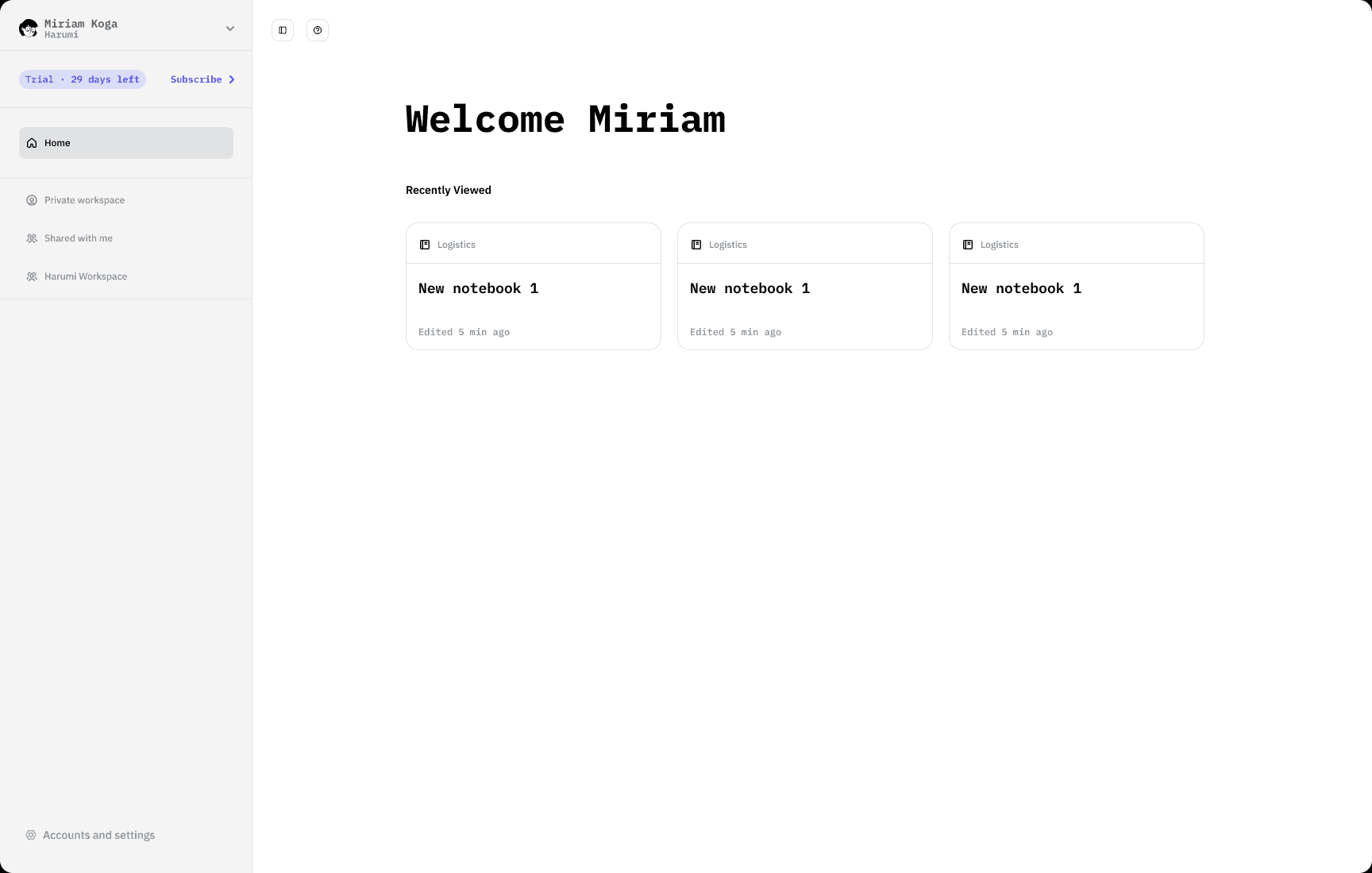
Model Deployment
Nextmv: Requires deploying models to Nextmv’s cloud infrastructure using commands and scripts.
Harumi: Works as an execution environment — no deployment needed. The platform handles execution, scaling, and runtime orchestration.
Harumi removes one of the biggest burdens in optimization engineering: deployment operations.
4. Two Different Philosophies for the Future of Optimization
Both Nextmv and Harumi are strong platforms serving important roles. But their approaches reflect different visions:
Nextmv prioritizes flexibility, code, and control — optimized for technical teams.
Harumi prioritizes accessibility, speed, and collaboration — optimized for entire organizations.
Harumi’s advantage becomes clear when optimization must reach beyond a small group of specialists. Its conversational AI and no-deployment environment make the process feel approachable and practical, even for users unfamiliar with mathematical modeling.
Conclusion: The Future Favors Accessibility
Optimization is becoming a core business capability. As this evolution continues, platforms that make optimization easier, faster, and more collaborative will drive broader adoption.
Nextmv provides a robust choice for technical teams seeking control. But Harumi stands out by making optimization accessible to everyone — not only experts. Its AI guidance, intuitive interface, and no-deployment execution model shape a new generation of decision tools designed for real-world use.
In a landscape where companies need answers quickly and teams are more cross-functional than ever, Harumi’s accessible approach may be the one that brings optimization into the hands of all decision-makers.




" height="39.77198px" id="BKLRi9ayM" transform="translate(2 3.808)" width="44px"/></svg>)